
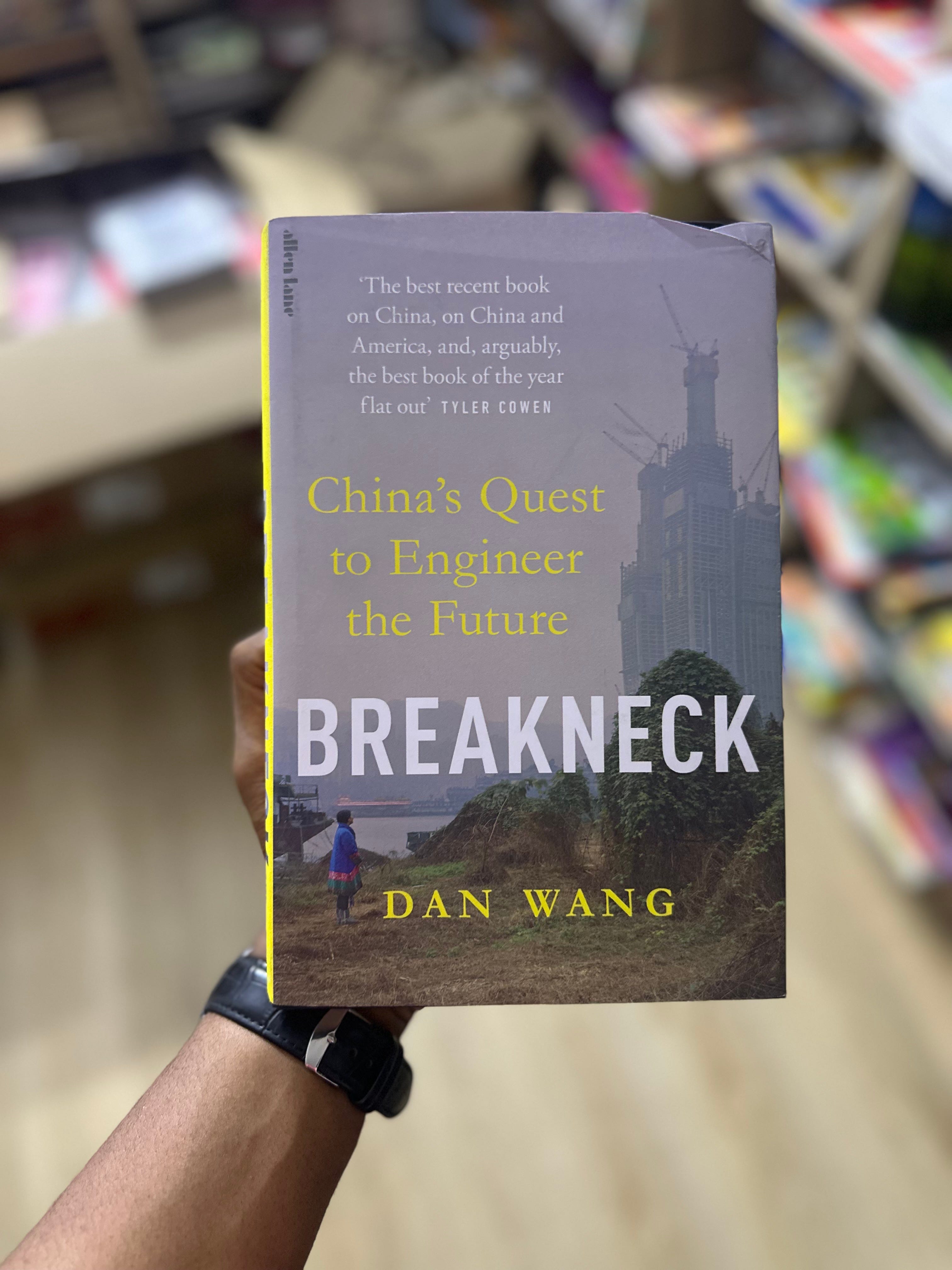
breakneck left me with two very different impressions.
the first half was genuinely illuminating. the central contrast between america as a society increasingly dominated by lawyers and china as one dominated by engineers is one of those ideas that, once encountered, becomes difficult to unsee. the book argues that the professions a society elevates eventually shape how that society thinks. lawyers are trained to interrogate, challenge, litigate, and constrain. engineers are trained to build, optimize, and solve. neither orientation is inherently superior, but they produce radically different outcomes when embedded into institutions.
viewed through that lens, many of the differences between china and the united states begin to appear less mysterious. china’s ability to construct infrastructure at staggering speed, execute long-term industrial policy, and rapidly iterate on national priorities is not merely a function of political structure. it is also cultural. engineers tend to ask, “how do we make this work?” lawyers tend to ask, “what could go wrong?” a healthy society probably needs both, but the balance matters.
what struck me most was the suggestion that progress is often a function of what a civilization rewards. if prestige flows toward those who build, more people become builders. if prestige flows toward those who arbitrate disputes, more people become arbiters. over time, the composition of an elite class becomes the composition of a nation’s instincts.
the second half of the book never quite sustained the same momentum. the sharpness of the opening chapters gradually gave way to arguments that felt more diffuse and less revelatory. perhaps that is unavoidable. the diagnosis was more compelling than the prognosis. the framework was stronger than some of the conclusions drawn from it.
still, even with the loss of intensity, the book succeeded in giving me a new lens through which to observe institutions, governments, and companies.
long after the specifics fade, i suspect i will continue noticing the distinction between systems built by lawyers and systems built by engineers.